Roofing materials
Choosing the right roofing material
Compare architectural shingles, natural slate, metal, composite and tile.
Read guideUnderstand your roof, compare materials and make informed decisions with practical guidance from a builder’s perspective.
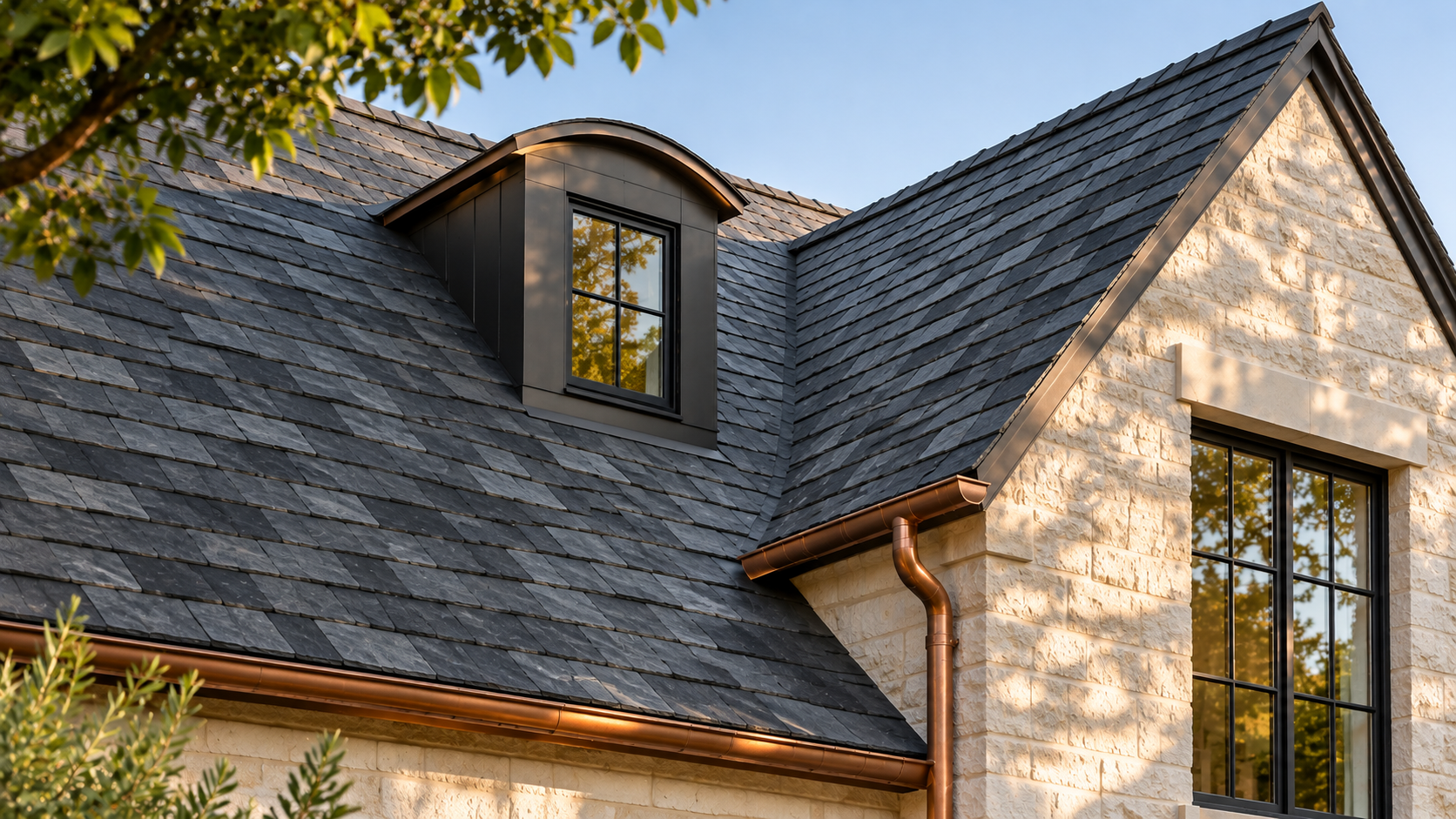
Compare architectural shingles, natural slate, metal, composite and tile.
Read guideA practical guide to hail, wind and documenting visible damage safely.
Read guideUnderstand the layers beneath the finished roofing material.
Read guideConsider architectural character, maintenance and long-term performance.
Read guideLearn what drives the scope and price of a roofing project.
Read guideLearn about deductibles, ACV, RCV and recoverable depreciation.
Read guideA roof covering is part of an assembly. The architecture, slope, roof geometry, decking, structure, climate and local requirements all influence which materials are appropriate. A material that works well on one home may be unsuitable for another.
Architectural asphalt shingles offer a broad range of profiles and colors. Natural slate offers distinctive stone texture but requires appropriate structural support and specialist installation. Standing-seam metal has clean lines and system-specific flashing requirements. Composite slate and shake can evoke traditional materials in engineered profiles. Clay and concrete tile offer distinct architectural character and may require a structural review.
Ask about product-specific ratings, compatible underlayment, ventilation where applicable, flashing, maintenance, warranties and installation qualifications. No material is immune to all storm damage. ROOK can help you discuss the options for your property.
Ask ROOK about your roofStay off the roof, especially after a storm. Look from the ground for missing or displaced materials, fallen branches, damaged gutters and visible debris. Inside, watch for new ceiling stains or active water intrusion. If there is an immediate hazard, stay clear and seek qualified help.
Take photographs from safe locations and note the date and observed conditions. Contact your insurer about policy requirements and deadlines. A roofing contractor can assess visible damage and prepare a repair or replacement estimate.
An assessment does not automatically mean the roof needs replacement. The appropriate scope depends on the damage, material, condition and manufacturer requirements. Insurance coverage is determined by the carrier under your policy.
Ask ROOK about your roofThe visible roof covering sheds water, but the layers and details underneath are just as important. Decking provides the substrate; underlayment and water barriers provide secondary protection according to the selected system.
Valleys, chimneys, walls, skylights, penetrations and roof edges require compatible flashing and detailing. These areas deserve careful planning and inspection, rather than relying on surface sealant alone.
Ventilation, insulation and moisture management should be considered together. Vented and unvented roof assemblies have different requirements. The correct approach depends on the design, code and manufacturer specifications.
Ask ROOK about your roofPremium materials may offer a distinctive appearance, different maintenance needs or longer expected service under appropriate conditions. Compare the complete installed system rather than assuming that a higher material price guarantees better performance.
Natural slate and some tile systems can be substantially heavier than asphalt shingles. A structural evaluation may be needed. Specialty metal and composite products also have specific slope, fastening and flashing requirements.
Consider replacement availability, repairability, installer qualifications, product-specific warranty terms and ongoing maintenance. Choose a system that suits your home and your priorities, not just the most expensive option.
Ask ROOK about your roofRoof surface area, pitch, access, stories, valleys, dormers and penetrations affect labor and material quantities. A steep or complex roof may require additional safety planning and detailing.
Removal, disposal, decking condition, flashing replacement, ventilation and the selected roof covering all affect the scope. Specialty materials can require additional preparation, structural review and skilled installation.
Ask for a written estimate that explains what is included, what is excluded and how unforeseen conditions will be handled. Comparing only the final price can obscure important differences in materials and workmanship.
Ask ROOK about your roofActual cash value (ACV) generally accounts for depreciation. Replacement cost value (RCV) refers to replacement cost as defined by your policy. Recoverable depreciation may be payable after eligible repairs if your policy provides for it.
Your deductible is your responsibility under the policy. Coverage, exclusions, deadlines and payment conditions vary. Contact your insurer for guidance specific to your policy.
ROOK can document visible roofing conditions and provide a construction estimate. ROOK does not act as a public adjuster, negotiate insurance coverage or promise claim approval. The insurer determines coverage under the policy.
Ask ROOK about your roofLet’s talk about the roofing system that makes sense for yours.